A healthy lifestyle is perhaps our most fashionable hobby.
of time. Fitness and detox, multivitamins, chia and quinoa, organic
cosmetics and anti-stress programs – it’s already difficult without these words
Imagine the tape in Instagram.
But, as shown by the latest research, one running
paths to health do not run. The key to success is— in
intestines.
The intestine is the largest human immune organ. Its area
up to 400 square meters. It is focused
about 80% of immunocompetent cells (i). And the total weight of all
бактерий, живущих в пищеварительном тракте — около 3кг.(i)
It turns out that our
immunity in general. You can continue to fear drafts and
give up your favorite pistachio ice cream or you can start
to harden, take care of yourself and regularly maintain healthy
microflora.
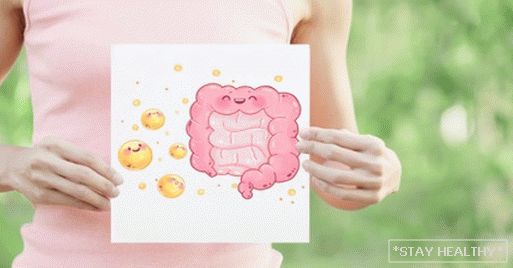
Here are the basic functions that a normal person performs.
microflora (i)
- Participates in digestion
- Performs a protective function, suppressing the multiplication of disease-causing
bacteria and preventing pathogenic infections - Provides enzymatic function, participating in the metabolism of proteins,
fats, carbon, bile and fatty acids - Synthesizes vitamin K and some vitamins of group B, influences
absorption of vitamin D and calcium and iron salts - Performs detoxification, absorbing toxins (phenols,
heavy metal compounds, etc.) and contributing to their removal from
of the body - Participates in the maturation of cells of the immune system, stimulates
immunoglobulin synthesis, protecting the body from dangerous infections.
But that’s not all. Let’s see what else affects
normal microbiota in healthy intestines?
Biologists have been studying the bacterial composition of microbiota for more than a century.
– and this is just the beginning.
Contents
What is probiotics?
The total number of microbes in the human body according to the latest data
— около 39 триллионов(xi). The greatest number
microorganisms responsible for our health are
in the intestinal microflora.
Of course, the first to talk about the huge role
the digestive tract in humans was the great Russian
scientist and Nobel laureate Ilya Mechnikov.
It was he who at the beginning of the twentieth century put forward the theory that bacteria
Lactic acid helps to improve health and longevity.
Then scientists introduced the term “probiotic”, which literally means
�”For life” (ii).
Probiotics are live microorganisms that, when introduced into
adequate amounts have a positive effect on
the state of health of the host (person) (ii).
Since then, there have been many studies on the effects of
probiotics on the intestinal microflora and the human body in
whole
Health benefits of probiotics
Here are just some of the conclusions that scientists arrived at.
Probiotics:
- can reduce the risk of diarrhea caused by
antibiotics (iii). - may be effective in dermatosis and chronic
fatigue (iv). - have a positive result in the treatment of the syndrome
irritable bowel (v). - can become helpers in the fight against obesity (vi).
- able to strengthen bones in older people (vii).
Intestine and nervous system
But one of the latest research has led (viii) to quite
awesome results. Оказывается, кишечник можно без
exaggerations called the “second brain”.
Scientists have shown that in the gastrointestinal tract is enteral nervous
a system that consists of about 400 million neurons can
work autonomously and interact with the brain.
�”Nervous systems” are interconnected by the so-called wandering
нервом — самым длинным нервом в организме — так что
no wonder that we have a “belly twist” when we are nervous or
experiencing anxiety.
And scientists at Caltech didn’t lose either
time and found out (ix) that the connection works in the reverse order:
it turns out that up to 90% of the total volume of serotonin is produced in
intestine (ix). And problems in the gastrointestinal tract can
seriously affect the psychological state of man.
So, despite the fact that exploring the microflora and inhabiting
its microbes to scientists still for a long time, already now it is possible with
уверенностью сказать: баланс в кишечнике — залог нашего
health
Вам кажется, что «если не болит — значит, все в порядке»?
This is not at all the case.
Disruption of microflora can be caused by inadequate nutrition,
consumption of canned and high-calorie foods, poor
ecology, stress, an inactive way of life and the reception of aggressive
drugs.
How to maintain microflora balance?
To combat specific diseases you need, of course,
consult a doctor. To maintain the balance of microflora
use probiotics.
Experts concluded that probiotics can be beneficial
only if their production is respected
certain conditions. In particular, microorganisms
- must be identified by type and strain
- must be alive, must be acid resistant or have
special delivery method to the places of attachment, - they should also go to the attachment points in necessary
quantities - and last but not least, must show effectiveness in
controlled clinical trials (x).
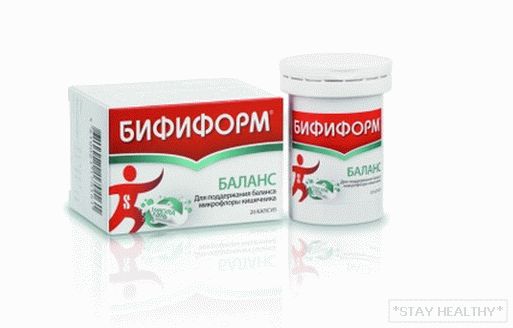
Pay attention to biologically active food supplement
Bifiform ®Balans.
 PP-BIF-RUS-0313
Useful lacto and bifidobacteria in Bifiform ® Balance are protected
capsules with modern technology DR®CAPS – technology that
helps maintain the viability of probiotic bacteria in
gastrointestinal tract.
Bifiform ® Balance take 1 capsule 1 time per day along with
Meal within 20 days.
In the meantime, scientists are hard at work on new research in their
laboratories, the discoveries they have already made show: we can
manage trillions of invisible living creatures that dwell inside
us (xi).
And, as the great physicist Nikola Tesla said, “the action of even the most
a tiny creature leads to changes in the whole universe. “
Probably, probiotics are what you need to maintain balance.
in our personal little universe.
Certificate of State Registration
№RU.77.99.11.003.E.003180.07.17 of July 21, 2017
BAA. NOT A MEDICINE
————————————————————
i TS Lazarev, F.F. Zhvaniya, Gastrointestinal tract, microflora and
immunity. Journal of Pediatric Pharmacology, 2009. ii World
Gastroenterological Organization Practical recommendations
�“Probiotics and Prebiotics”, May 2008
http://www.worldgastroenterology.org/UserFiles/file/guidelines/probiotics-russian-2008.pdf
iii Susanne Hempel, PhD; Sydne J. Newberry, PhD; Alicia R.
Maher, Probiotics for the Prevention and Treatment of
Antibiotic-Associated Diarrhea, MD; May 9, 2012
iv Catharine Paddock PhD, Potential probiotic effects beyond
gut: psoriasis, CFS, 08.13.2013
https://www.medicalnewstoday.com/articles/264719.php
Yuan F1, Ni H2, Asche CV3,4, Kim M3, Walayat S5, Ren J3.,
Efficacy of Bifidobacterium infantis 35624 in patients with
irritable bowel syndrome: a meta-analysis, Curr Med Res Opin. 2017
Jul; 33 (7): 1191-1197
https://www.ncbi.nlm.nih.gov/pubmed/28166427
vi Université Laval, Certain probiotics could help women lose
weight, January 28, 2014
https://www.sciencedaily.com/releases/2014/01/140128103537.htm
vii Anna G. Nilsson, Daniel Sundh, Fredrik Bäckhed, Mattias
Lorentzon, Prevention of bone loss with Lactobacillus reuteri viii
PETER DOCKRILL
Makes You Poop Think twice before going to the bathroom.
https://www.sciencealert.com/you-have-a-second-brain-we-now-know-how-it-makes-you-poop-enteric-nervous-system
ix Jessica Stoller-Conrad, Microbes Help Produce Serotonin in
Gut
http://www.caltech.edu/news/microbes-help-produce-serotonin-gut-46495
x World Health Organization, “Probiotics in food”, Food and
Agriculture Of The United Nations, Rome, 2006 xi Luke K Ursell,
Jessica L Metcalf, Laura Wegener Parfrey, Rob Knight, Defining the
Human Microbiome, Nutr Rev. 2012 August